Taonga Puoro: Reviving Ancestral Sound Through Traditional Māori Music
***Disclaimer***
This article was AI generated and while it’s purpose is to be informative, it does:
A - Not reflect our personal views in any way and
B - Should not be relied upon as a sole source of information for the subject under discussion.
Taonga Puoro: Reviving Ancestral Sound Through Traditional Māori Music
At the root of Tristan Marler’s art practice lies a powerful expression of Māori identity and artistry — taonga puoro, the traditional musical instruments of Aotearoa. These handcrafted pieces are more than musical instruments; they are vessels of whakapapa, storytelling, and spiritual connection, carefully created to carry ancestral voices into the present.
Through his work, Tristan Marler follows in the footsteps of the renowned carvers and musicians who renewed life to this ancient tradition, blending cultural knowledge, contemporary craftsmanship, and personal passion into every taonga puoro he creates.
The History and Revival of Taonga Puoro
Taonga puoro were once central to everyday Māori life. Traditionally crafted from wood, bone, stone, and shell, these instruments were used for ceremony, healing, courtship, storytelling, and communication with the natural and spiritual worlds.
Before colonisation, taonga puoro were heard across forests, waterways, and marae. Each instrument had its own purpose, voice, and tikanga. However, through cultural suppression and social change, many instruments and playing traditions were lost or silenced.
By the mid-20th century, taonga puoro were close to disappearing.
From the late 20th century onward, a powerful revival movement emerged. Through research, oral histories, museum collections, and community-led teaching, these instruments were rediscovered and reintroduced to Māori communities. Today, taonga puoro are once again recognised as living taonga — essential expressions of mātauranga Māori and cultural resilience.
This revival continues through contemporary carvers and practitioners who honour tradition while shaping new pathways for future generations.
A Personal Journey Rooted in Whakapapa and Sound
For Tristan Marler, the journey into taonga puoro began with a deep personal connection to sound, culture, and carving. His foundation lies in the study of whakairo rākau (traditional wood carving), where he learned to work with native timbers, ancestral forms, and symbolic design.
Through whakairo, Tristan developed an intimate relationship with wood — understanding its grain, strength, and mauri. This relationship naturally led him toward taonga puoro, where carving and sound are inseparable.
His passion grew from a desire not only to create beautiful objects, but to restore their voices and cultural purpose. Each instrument reflects years of learning, experimentation, and respect for ancestral knowledge.
For Tristan, taonga puoro are living companions — shaped by intention, respect and connection to whenua and whakapapa.
Handcrafted Taonga Puoro: Instruments with Meaning
The Manawa Tapu taonga puoro collection features a carefully curated range of traditional Māori instruments, designed for both performance and collection.
Nguru (Nose Flutes)
Nguru are iconic Māori nose flutes, producing soft, breath-like tones associated with reflection, memory, and emotional expression.
Carved with balance and precision, Tristan’s nguru offer responsive airflow and tonal clarity. These instruments are ideal for meditation, personal practice, and performance.
Kōauau and Kōauau Ponga Ihu (Flutes)
The kōauau is one of the most widely recognised taonga puoro. Traditionally used for love songs, storytelling, and personal expression, its voice is intimate yet powerful.
Crafted from carefully selected timbers and uku (clay), Tristan’s kōauau and kōauau ponga ihu are tuned for tonal depth and playability. They suit beginners, experienced musicians, and collectors seeking authentic Māori flutes.
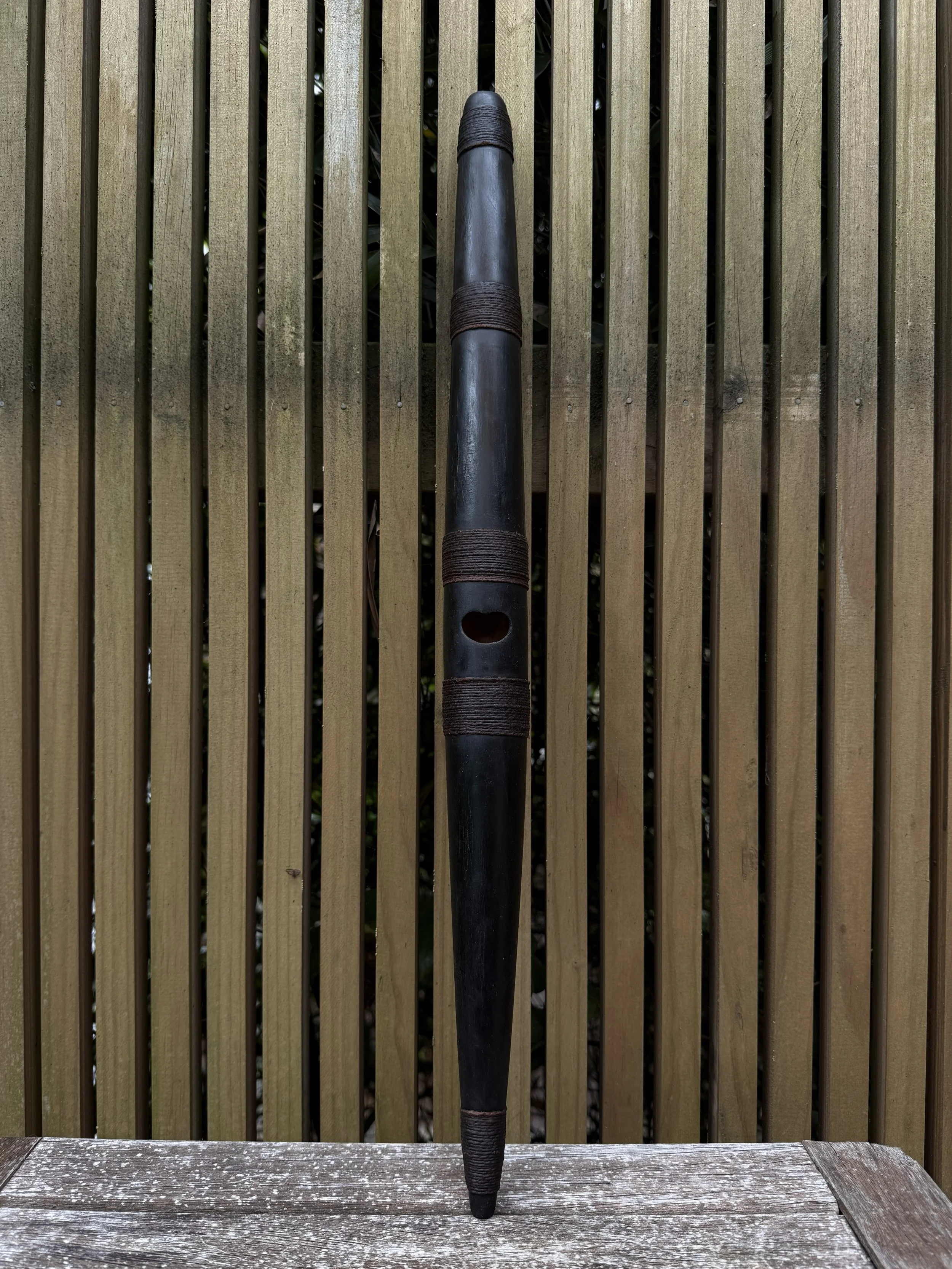
Pūtōrino — The Sacred Voice of Hine Raukatauri
The pūtōrino is one of the most complex, spiritually significant, and revered taonga pūoro. It is unique in its ability to produce both male and female voices, and can be played as a flute, trumpet, and voice-modulating instrument.
Central to the pūtōrino is the pūrākau of Hine Raukatauri, the Atua of flute music. According to tradition, Hine Raukatauri transformed herself into the case moth and now resides within the cocoon of the pūtōrino. Her presence gives the instrument its distinctive, ethereal voice and spiritual power.
When played, the pūtōrino is said to carry the breath of Hine Raukatauri, connecting the musician to the Atua, the natural world, and ancestral realms. For this reason, the instrument is often associated with ceremony, healing, storytelling, and deep emotional expression.
Tristan approaches the carving of pūtōrino with great care and respect for this sacred lineage. Each piece is shaped, hollowed, and tuned by hand to honour both the physical acoustics and the spiritual significance of the instrument. The result is a taonga that produces rich, layered tones and responds sensitively to different playing techniques.
Every pūtōrino reflects balance, duality, and harmony — embodying the enduring relationship between sound, spirit, and whakapapa.
Pūtātara (Ceremonial Trumpets)
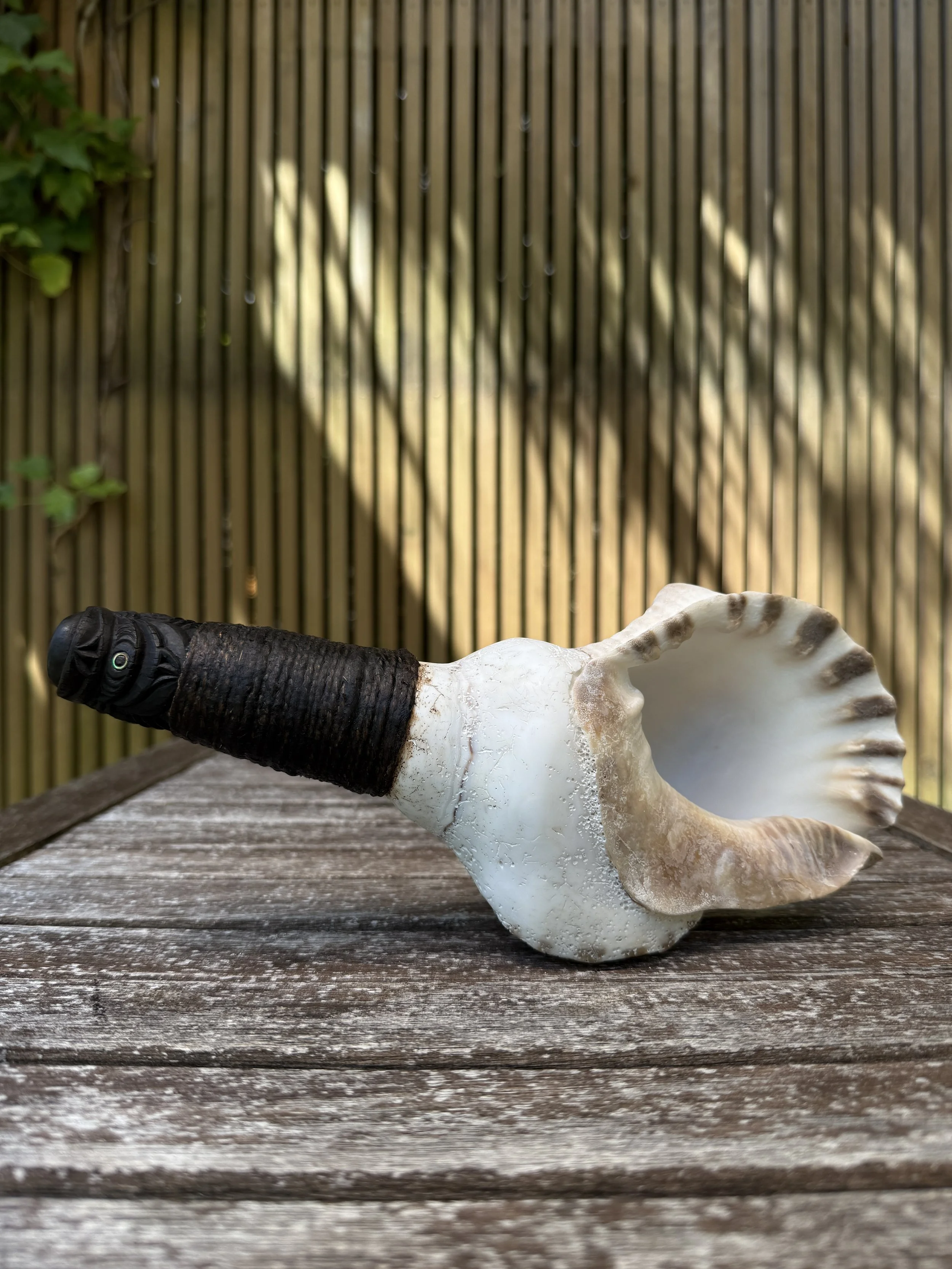
The pūtātara is a traditional trumpet, often made from shell or wood, used to signal important events, welcome visitors, and mark ceremonial moments.
Historically, pūtātara were used on marae, in warfare, and during significant gatherings. Their powerful, resonant sound carries authority and mana.
In the Manawa Tapu collection, Tristan’s pūtātara reflect both traditional form and contemporary craftsmanship, offering strong projection and ceremonial presence. These instruments are prized by cultural practitioners, performers, and collectors.
Sustainable Craftsmanship and Cultural Integrity
Every taonga puoro is created with respect for tikanga Māori and the natural environment. Tristan sources materials responsibly and works with native timbers in ways that honour their life force.
From design and carving through to finishing and tuning, each instrument is shaped by patience and purpose. This slow, intentional process ensures both acoustic quality and spiritual integrity.
The result is a collection of instruments that resonate — physically, culturally, and emotionally.
Why Choose Manawa Tapu to create your next Taonga Puoro?
When you purchase taonga puoro from Manawa Tapu, you are investing in:
Authentic Māori craftsmanship
Instruments grounded in cultural knowledge
Hand-carved, limited-run pieces
Sustainable and ethical production
A living connection to ancestral sound
These taonga are ideal for musicians, educators, collectors, and anyone seeking a deeper relationship with Māori culture through music and art.
Continuing the Legacy of Ancestral Sound
Through his work, Tristan Marler contributes to the ongoing revival of taonga puoro in Aotearoa and beyond. His instruments form part of a wider movement to reclaim, celebrate, and share Māori sound traditions with future generations.
From kōauau and nguru to pūtōrino and pūtātara, each piece represents a bridge between past and present — between ancestral wisdom and contemporary creativity.
By bringing these instruments into homes, studios, classrooms, and performance spaces, people can support the living legacy of taonga puoro and ensure that their voices continue to be heard.