How to Distinguish Authentic Taonga Māori from Mass-Produced Souvenirs
***Disclaimer***
This article was AI generated and while it’s purpose is to be informative, it does:
A - Not reflect our personal views in any way and
B - Should not be relied upon as a sole source of information for the subject under discussion.
How to Distinguish Authentic Taonga Māori from Mass-Produced Souvenirs
Why Supporting Māori Artists Like Tristan Marler - Manawa Tapu Strengthens Culture, Craft and Legacy
In Aotearoa New Zealand, Māori art is far more than decoration — it is a living language, a vessel for whakapapa (ancestry), stories and identity. Yet many visitors and art buyers can struggle to tell authentic taonga Māori apart from cheap, mass-produced souvenirs that mimic Māori motifs without cultural meaning or connection.
At the foundation of Manawa Tapu’s practice is the belief in championing genuine Māori creativity. When you choose authentic taonga — especially from dedicated artists like Tristan Marler — you support the continuation of traditional Māori arts and help build a thriving legacy for future generations.
What Makes Taonga Māori Special?
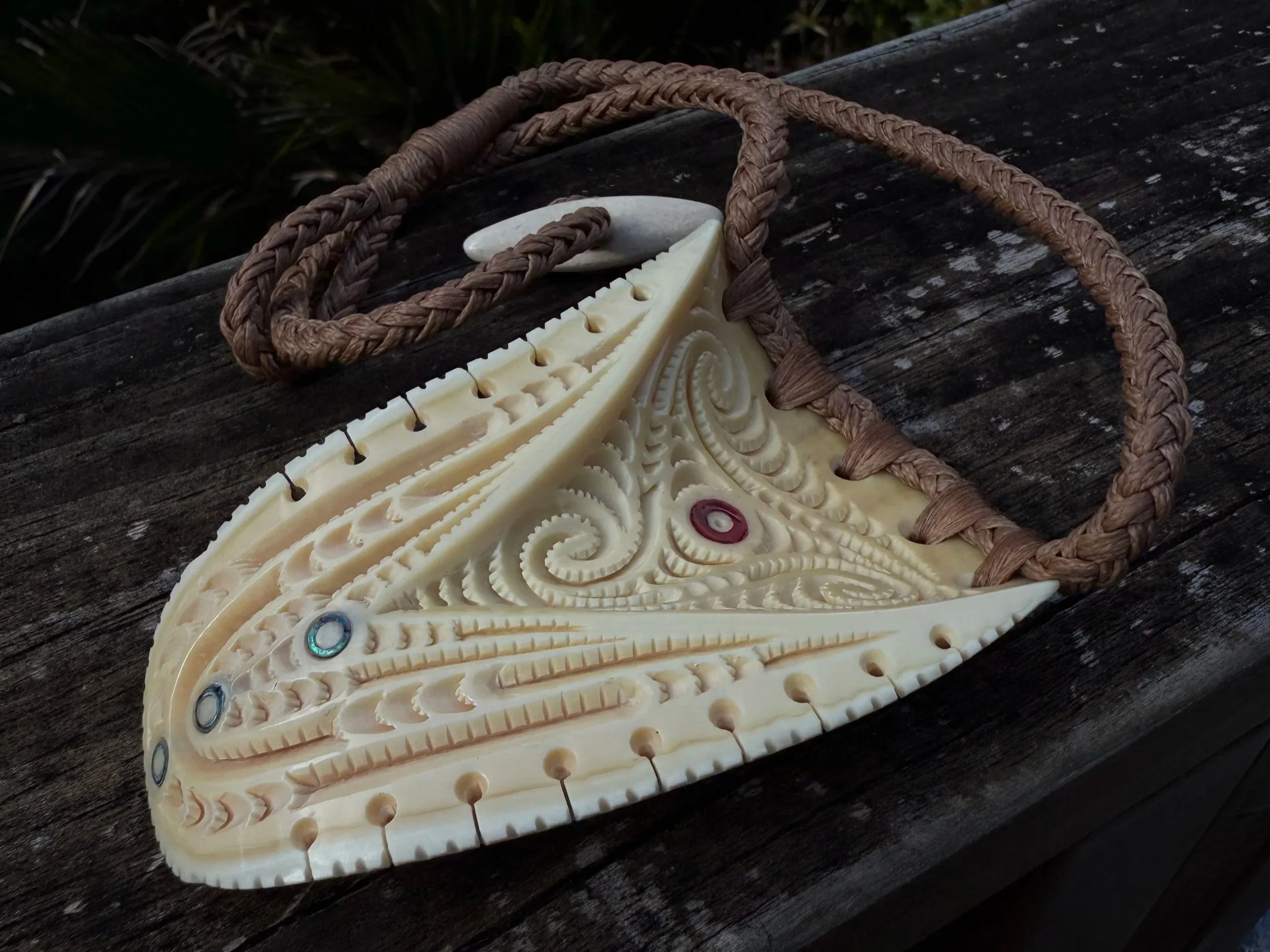
Rei puta - traditional Māori sperm whale tooth pendant. Carved by Tristan Marler (Manawa Tapu) in 2025.
Taonga Māori are treasured, culturally embedded works created with deep understanding of tikanga (customs) and mātauranga Māori (traditional knowledge). These are often:
Whakairo (carving)
Tā moko (traditional tattooing)
Tukutuku and kōwhaiwhai patterns
Weaving/ raranga
Taonga puoro - traditional Māori instruments
Contemporary work rooted in tradition
Each piece speaks to history and identity — something that’s missing in mass-produced products.
Beware: Mass-Produced Māori-Style Souvenirs
Many souvenirs with Māori patterns look attractive but are manufactured cheaply overseas in bulk. These items are often:
Made without cultural consultation
Produced from synthetic materials
Lacking connection to iwi or artist
Designed purely for quick profit
They may be visually appealing, but they do not carry the mana, meaning or lineage of genuine taonga Māori.
Meet Tristan Marler — The Artist Behind Manawa Tapu
At the heart of Manawa Tapu is Tristan Marler, a multi-disciplinary Māori artist of Te Rarawa / Te Aupōuri descent from the Hokianga in Te Tai Tokerau. Based in Tāmaki Makaurau Auckland, Tristan’s artistic journey spans over 15 years and reflects a deep commitment to Māori arts and cultural expression. (Manawa Tapu | Tā Moko - Toi Māori)
Tristan trained in whakairo rākau (traditional wood carving), grounding his practice in the foundational art forms of his tūpuna. From there, he expanded into tā moko — the traditional Māori tattooing practice — blending ancestral design language with contemporary artistic sensibilities. (Manawa Tapu | Tā Moko - Toi Māori)
Over years of development, Tristan’s creative scope has broadened significantly. Today, he:
Paints striking visual art and limited-edition prints
Maintains his tā moko practice, working alongside clients to adorn their bodies with whakapapa specific patterns.
Carves both wood and bone, creating taonga both large and small for iwi/hapū and private customers.
Makes jewellery and clothing designs inspired by Māori patterns
Works on commercial design projects for NZ companies such as Kiwibank
Collaborates with international brands and exhibitions
Engages in cultural dialogues about design and Māori identity (Manawa Tapu | Tā Moko - Toi Māori)
Tristan sees Māori visual language not just as aesthetics but as a way to honour the past, celebrate the present, and shape the future of Māori artistic practice. (Manawa Tapu | Tā Moko - Toi Māori)
How to Identify Authentic Taonga Māori
1. Look for the Maker’s Story
Authentic Māori art usually comes with clear information about the artist — their name, iwi, background and intentions. Tristan shares his whakapapa openly and this connection underpins all his work. (Manawa Tapu | Tā Moko - Toi Māori)
If a seller cannot tell you who made a piece or where it came from, it’s often a red flag.
2. Quality Materials & Craftsmanship
True taonga are created with care and respect, often using processes steeped in tradition. You’ll see natural materials, distinctive hand-tool marks, intentional design elements and deep symbolism — all of which are hallmarks of Māori art.
Mass-produced items frequently use plastic or resin and lack depth in execution.
3. Cultural Meaning Matters
Authentic Māori art communicates narratives, connections to land, ancestors and identity — not just decorative patterns. Tristan’s work, for example, embeds Māori visual language that reflects stories and relationships unique to Māori worldviews. (Manawa Tapu | Tā Moko - Toi Māori)
4. Educated by Traditional & Institutional Training
Many respected Māori practitioners have formal training in traditional arts. This includes not only community mentorship but also recognised institutions such as the New Zealand Māori Arts and Crafts Institute, which has uplifted Māori arts and crafts since 1926 and played a key role in training carvers and artisans. (Wikipedia)
Education like this ensures techniques and tikanga are carried forward with integrity.
5. Price Reflects Time & Skill
High-quality taonga deserve investment. Authentic pieces take time, skill and cultural thought — and their price reflects that value. Be cautious of extremely cheap Māori-style items with no connection to an artist.
Why Supporting Māori Artists Is Crucial
Keeping Traditional Knowledge Alive
Māori art is part of a living cultural ecosystem that includes language, stories and identity. When artists like Tristan are supported, they can continue practising and sharing these traditions with wider audiences.
Building Sustainable Futures
Purchasing from genuine Māori artists increases economic opportunities within Māori communities and encourages rangatahi (young people) to pursue cultural arts.
Encouraging Innovation Rooted in Tradition
Artists like Tristan are redefining Māori art for new generations — creating work that bridges history and contemporary expression while remaining rooted in tikanga.
Leaving a Legacy for Future Generations
Authentic taonga become heirlooms — living pieces of culture that can be passed down through whānau, teaching and inspiring future generations.
Support with Purpose
Next time you’re looking at Māori art, ask:
Who made this?
What story does it tell?
Where was it made?
What does this purchase support?
Choosing authentic taonga from artists like Tristan Marler (Manawa Tapu) means you’re investing in culture, community and future creativity — not just a souvenir.
To explore genuine Māori art and connect with Tristan’s work, visit www.manawatapu.co.nz.